
The criticality analysis is established based on two measurement scales:
- Severity scale
- Probability scale
Each scale can be composed of N criteria.
The probability scale allows assessing the probability of the risk occurring. It commonly consists of a probability criterion evaluated using a format such as "Very unlikely / Unlikely / Occasional / Likely / Certain".
The severity scale allows assessing the severity of the risk if it occurs. It commonly consists of an impact criterion evaluated using a format such as "Minor / Significant / Severe / Major / Catastrophic".
This analysis helps define the criticality of the risk and position it on a risks map.
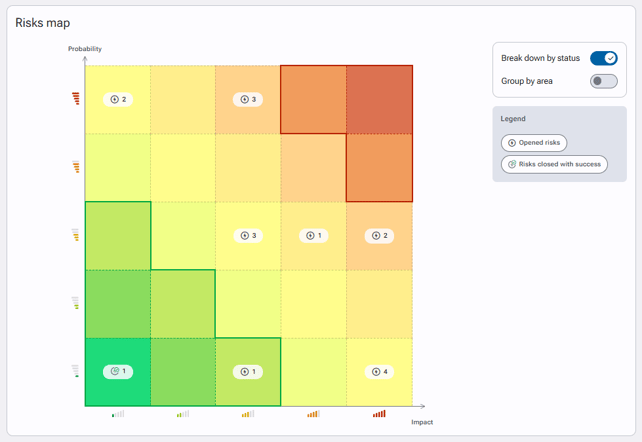
This risk mapping enables the definition of actions to mitigate risks with the highest level of criticality. These actions are formulated as initiatives and associated action plans. Consequently, it is possible to declare initiatives, associate them with the risk(s) they contribute to mitigating, monitor the implementation of these initiatives, and update the risk criticality or even close the risk.